Bunny Mood
A casual game that brings Social-Emotional Learning (SEL) practices to life through playful interaction.

TIME
Feb~May, 2023
OVERVIEW
Bunny Mood is an independent student project created during my graduate studies in Parsons, integrating Social Emotional Learning (SEL) mechanics into a casual mobile game.
INSTRUCTOR
Why I Created This Project ?
MOTIVATION

Growing up in a highly test-driven East Asian school system, I had limited exposure to social emotional learning (SEL) early on.

Through life experiences and ongoing self-reflection, I gradually built emotional resilience and came to appreciate the value of SEL—an understanding that has made my life more grounded and fulfilling.

Realizing that many people from similar “suck-it-up-get-it-done-don’t-talk-about-feeling” backgrounds never even get the chance to explore their emotions, I wanted to create something that could offer support—something I wish I had earlier in my own journey.
But first—here’s a glimpse
Bunny Mood transforms emotional check-ins into a daily, rewarding ritual: players log how they feel by feeding a virtual bunny, and receive “emotion chocolates” to unlock new items and stories. At its core, the game integrates SEL into playful, interactive experiences.
OVERVIEW

Frequently praised for
-
Emotional depth
-
Playful mechanics
-
Helping raise self-awareness
60+ visitors at the 2023 Parsons Graduation Show playtested the project and discovered the concept of Social Emotional Learning (SEL) .
OUTCOME

Early feedback showed cross-age appeal and affirmed the potential of gamified Social Emotional Learning to foster emotional growth in a playful, accessible way.
A design process grounded in continuous playtesting
DESIGN PROCESS


The issue goes beyond tools—it’s rooted in cultural and systemic gaps.
Lack of playfulness:
Students, especially teens, often feel resistant or disengaged.
Emotionally abstract:
Charts and rating scales make it hard to build emotional resonance.
Didactic tone:
Many tools take an instructional approach rather than fostering exploration or empathy.
Low long-term engagement:
Without feedback loops or social elements, users tend to drop off easily.
Limitations of traditional SEL tools
Feelings Charts / Mood Meters

Curriculum-based Tools

Emotion Journals / Worksheetsd Tools

Counseling cards or activity booklets used in therapy sessions

Traditional SEL Tools
Social and Emotional Learning (SEL) is defined as “The process through which children and adults acquire and apply the knowledge, skills, and attitudes needed to develop healthy identities, manage emotions, achieve goals, show empathy for others, build supportive relationships, and make responsible decisions.”
——CASEL (Collaborative for Academic, Social, and Emotional Learning)
According to CASEL, SEL is built on five core competencies that form the foundation of most SEL curricula:
1. Self-Awareness – Understanding one’s emotions and identity
2. Self-Management – Managing emotions and working toward goals
3. Social Awareness – Showing empathy and understanding others
4. Relationship Skills – Building and maintaining positive relationships
5. Responsible Decision-Making – Making ethical and constructive choices
SEL matters, but it’s often presented in ways that don’t connect with real life.
BACKGROUND
What is SEL?
Many people miss out on SEL — not because they resist it, but because they’ve never been encouraged to.
THE CHALLENGE
How might we make social-emotional learning (SEL) more approachable and engaging, especially for teens at a critical stage of emotional development?
DESIGN GOAL
Idea 1 & 2 & 3
Translate emotion-related physiological data into interactive visuals

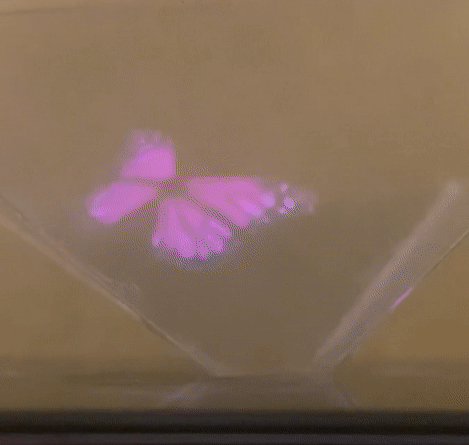
✓ Visualizing emotions helps with emotional awareness and regulation
✗ The immaturity of emotion detection technology
✗ Emotion detection technology is morally debatable
Idea 4
Visualize emotions into VR experiences, constituting a VR museum of emotions
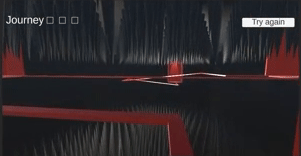
✓ Immersive
✘ Hard to interpret
✘ Not everyone has a VR device
Idea 5: EmoMonster-A business simulation game
Players fed a monster with facial expressions, and it pooped chocolates—each with an emotion story that could be sold for in-game currency.

✓ Players enjoyed rich, story-based emotion descriptions
✓ “Chocolate” metaphor made feelings easier to process
✓ Poop humor resonated with teens
✘ Emotions are interchangeable here—lacked depth
✘ Business mechanics distracted from emotional focus
Idea 6: EmoMonster-Board game for two players.
Two players assign three tokens—frequency, pleasantness, and negativity—to emotion monster cards, then use them in battles.

✓ Assigning tokens encourages self-reflection and emotional awareness
✓ Players enjoyed rich, story-based emotion descriptions
✓ Turning emotions into monsters made them easier to understand and manage
✘ Board games lack the consistency needed for real emotional growth
✘ Combat mechanics shifted focus away from emotions toward winning
Idea 7: EmoTown – a multiplayer board game
Players assign tokens—frequency, pleasantness, and negativity—to emotion monster cards, then battle with them on the Town Map.

Rapid Prototype & Playtest in FigJam
✓ Assigning tokens and placing cards encourages self-reflection
✓ Players enjoyed reading emotion stories and observing others’ choices
✓ Turning emotions into cards made them easier to process
✘ Occasional play isn’t enough for long-term emotional growth
✘ Combat focus distracted from emotional intent
✘ Rules were too complex for non-gamers
✘ Each round was too long—around 40 minutes
The final concept: Bunny Mood—a pet game
Feed Bunny your emotions → Bunny poops Emo-Chocolate (the in-game currency) → Use it to buy props and influence Bunny’s behavior and receive “Emotion Fragments” stories

✓ Feeding acts as an emotional check-in and builds awareness
✓ Players enjoyed the “Emotion Fragments” stories
✓ Poop humor felt fun and relatable for teens
✓ Pet-game format is intuitive and emotionally soothing
✓ Turning emotions into bunny droppings made them easier to process
✓ Non-competitive, single-player flow—play anytime, stop anytime
✓ Bunny avoids reinforcing gender or emotional stereotypes
Once I set the design goal, I began by experimenting with playful mechanics—because an engaging “hook” was essential for this project. Starting this way also allowed an early concept to guide the following research and design process.
And the final idea is:
A pet game where players feed emotions to a bunny, forming the core loop that drives further interactions.
IDEATION

2. Analyzed App Store reviews of related products for recurring user insights.

2. Conducted 19 interviews across age groups to understand diverse emotional needs, while prioritizing insights from teens (12–19), the main target users of Bunny Mood.

1. Define the product space to understanding the users
USER RESEARCH
For “emotion tracking,” a key function in SEL, users show diverse preferences:
-
The natural flow of a diary-style format
-
Inserting media
-
The simplicity of tag selection
-
Other alternative methods
Small rewards help sustain engagement
-
Users are more likely to keep logging emotions when small rewards or progress markers are present
-
Light gamification (e.g., streaks, unlockable items, or badges) motivates continued use without feeling burdensome
-
Rewards should remain subtle and supportive—too much pressure risks discouraging users when they miss a day
Reviewing Past Records Feels Rewarding
-
Users enjoy discovering patterns in their emotional records
-
Recalling past experiences gives them a sense of warmth and comfort
The broken windows effect
-
Once users stop and a gap appears in their records, it becomes difficult to continue
-
The experience should be designed to be forgiving and resilient to breaks
Social features are highly polarizing:
-
Some users strongly oppose making their emotions visible to others, while some enjoy sharing
-
However, nearly all users like the option to view others’ emotions
Usage Context:
-
Most users engage with this type of product during short breaks after completing important tasks
-
The experience therefore needs to feel light, easy, and not mentally demanding
INSIGHTS
Prototype 1:
A simple lo-fi prototype to illustrate the idea and gather feedback

Prototype 2:
-
Transformed from a 2D app to an AR game to enhance immersion and sense of companionship.
-
Added characters and narrative design.
-
Focusing on testing player feedback on the emotion logging method.

Prototype 3:
Added comics and narrative design

Prototype 4:
-
Changed the Bunny character and added more facial expressions.
-
Integrated the tutorial into the narrative design.

The Final Design:
-
Add more types of bunny foods (the emotion-logging methods)
-
Revised the narrative design to make it more understandable and funny.

PROTOTYPING
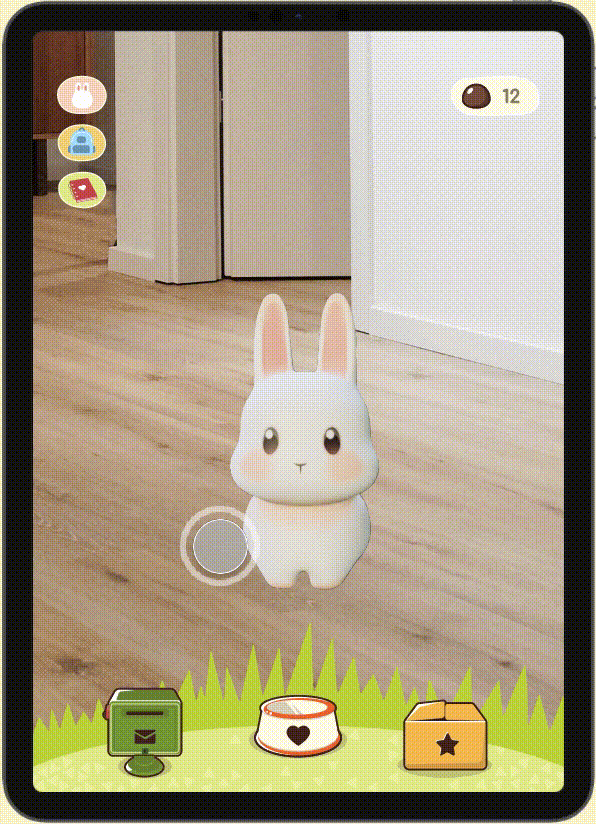
Mailbox
Incorporating social features into the final design, the mailbox icon serves as the portal to various social functions.
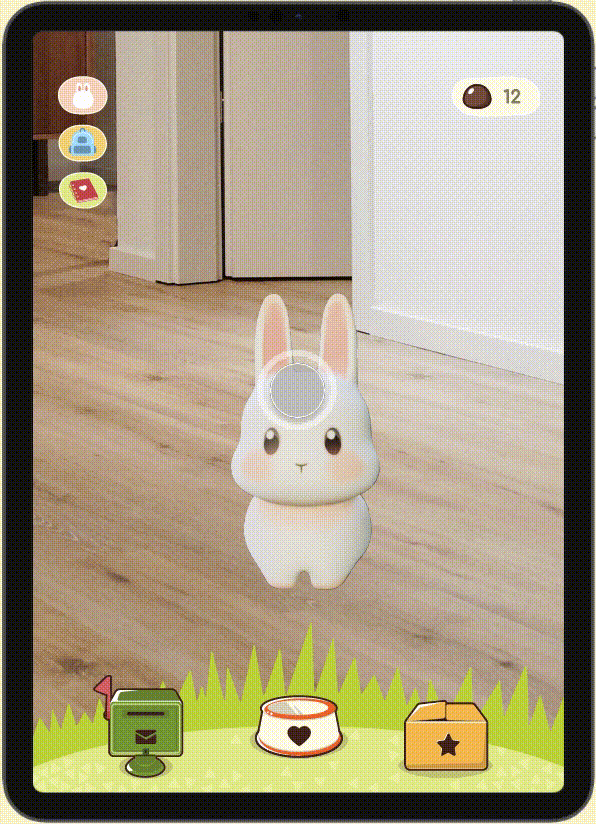
Feel link
If you and your friend both rate the same manga with the same score on the same day, triggering the "Feel link", both of you will be rewarded with emo-chocolate.
Exchange repeated fragments
You will receive emotion fragments from your friends and you can also give yours to them.
Social Features
Social mechanics are introduced to support social-emotional learning (SEL) by encouraging shared recognition and acceptance of emotions, enriching the emotional loop with greater social depth and sustained engagement.
Receive emotion fragments
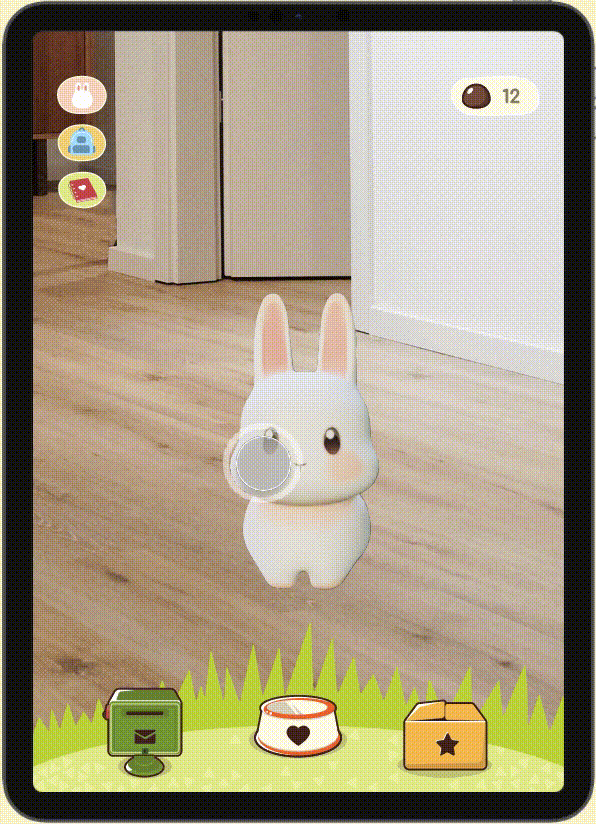
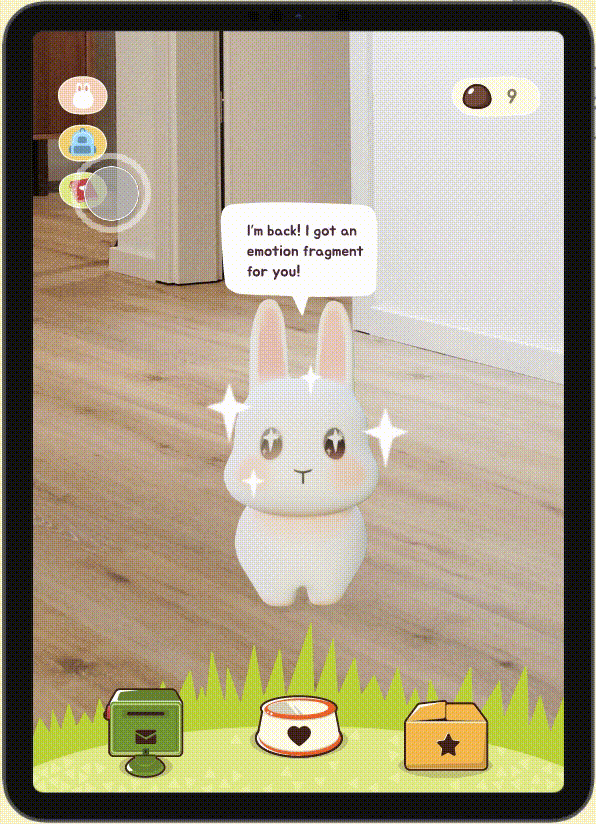
When the bunny back home, it may bring you an emotion fragment. Collect the emotion fragments to compose a manga story that depicts a context-based emotion from the bunny.

Rate the emotion
Players can buy clothes for their bunnies, affecting their destinations. For instance, a swimsuit may bring back emotions from the swimming pool. This adds depth and customization to the game
Comic Content
Influenced by different props, the Bunny sets off on unique journeys and returns with "Emotion fragments" —subtle, everyday feelings it experienced along the way. These emotional fragments invite players to tune into small, often overlooked emotions, enhancing empathy and emotional sensitivity.
As a game reward, "Emotion fragments" complete the gameplay loop, adding both narrative surprise and emotional depth.
Purchase props
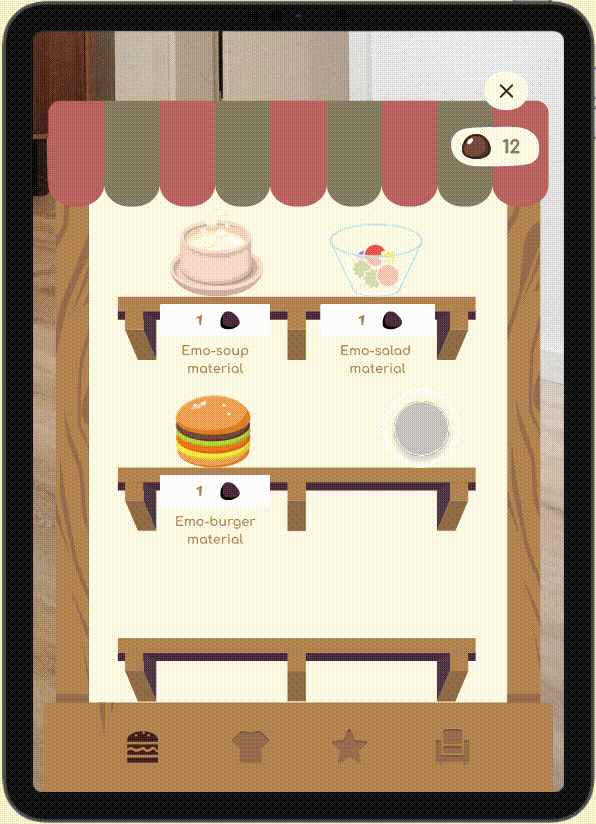
Besides raw food materials, players can utilize emo-chocolates to purchase props in the other three categories: articles, clothes, and furniture.
Clothes
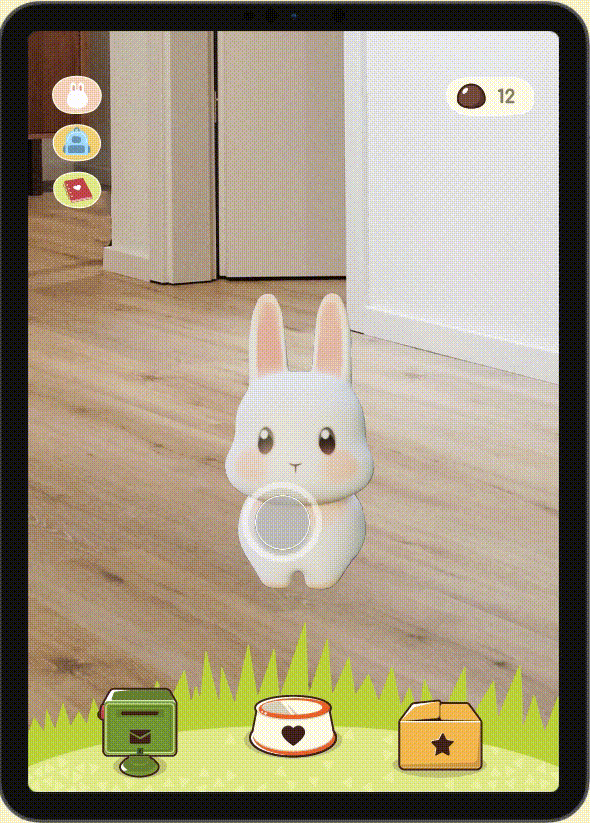
Players can buy clothes for their bunnies, affecting their destinations. For instance, a swimsuit may bring back emotions from the swimming pool. This adds depth and customization to the game
Articles
Articles influence the bunny's activity in the emotion fragment. For example, giving the bunny a ticket may result in an emotion fragment depicting it holding the ticket and taking a train.
Pack articles
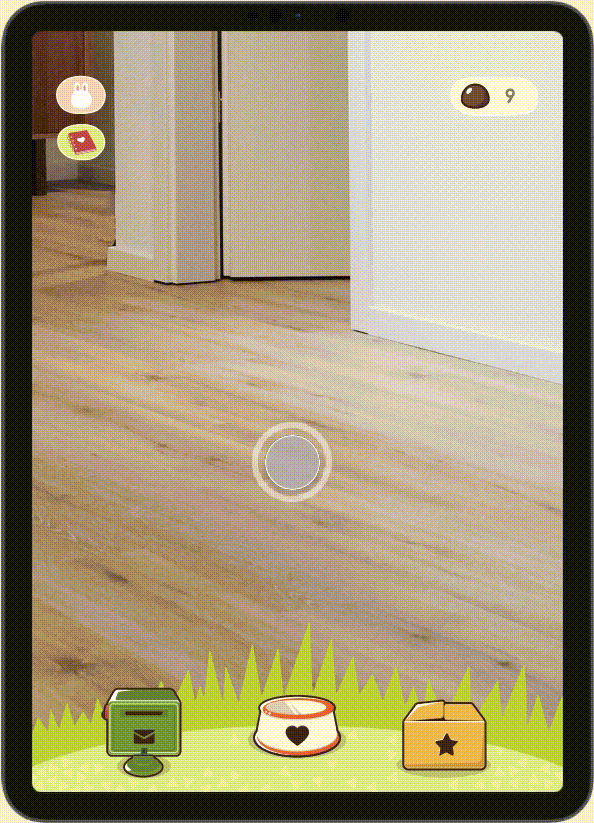
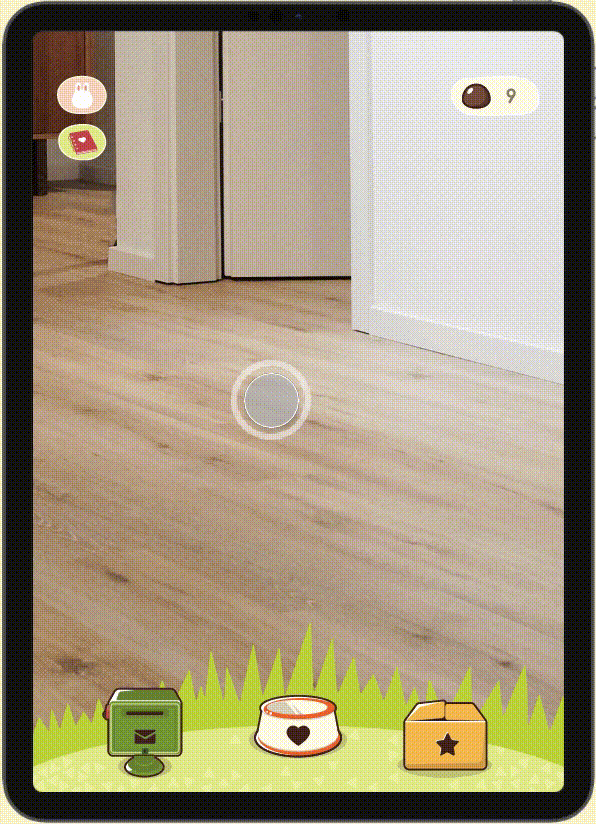
When Bunny is away, you can place articles in the room for it to pack upon returning. If Bunny is at home, you can also put articles directly into its backpack.
Furniture
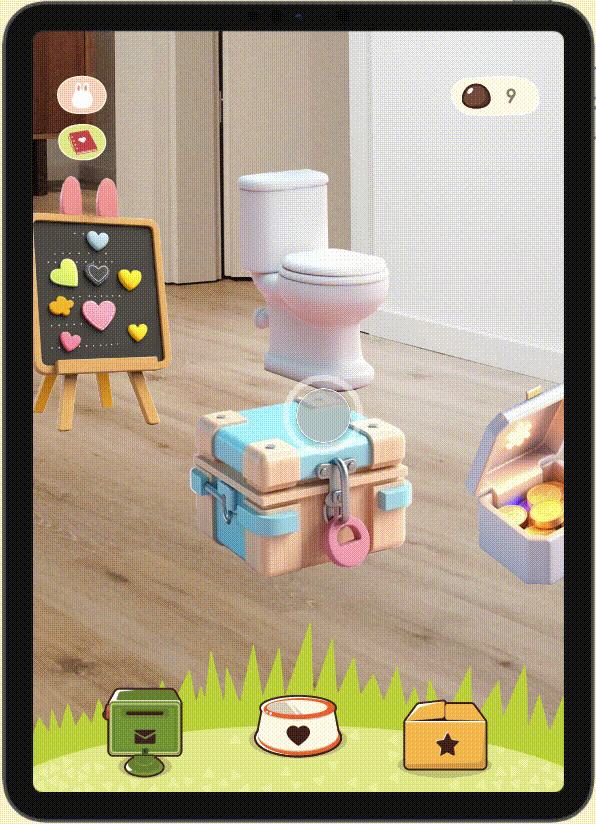
Integrating features into furniture allows for customization and a richer shopping experience. It also enables the addition of new features in the future.
Examples of furniture
• Code case: Reserve food for a specific bunny visitor.
• Magic box: Sell items Potty: Automatically collect emo-chocolate.
• Board: Check feeding records.
……
Place furniture in the room and tap to use its functions in an augmented reality (AR) environment.
Currency System
Feeding emotions to the Bunny—who then turns them into Emo-Chocolate—starts the game loop. This playful act helps players externalize their feelings, making it easier to acknowledge and express emotions in a light, judgment-free way.
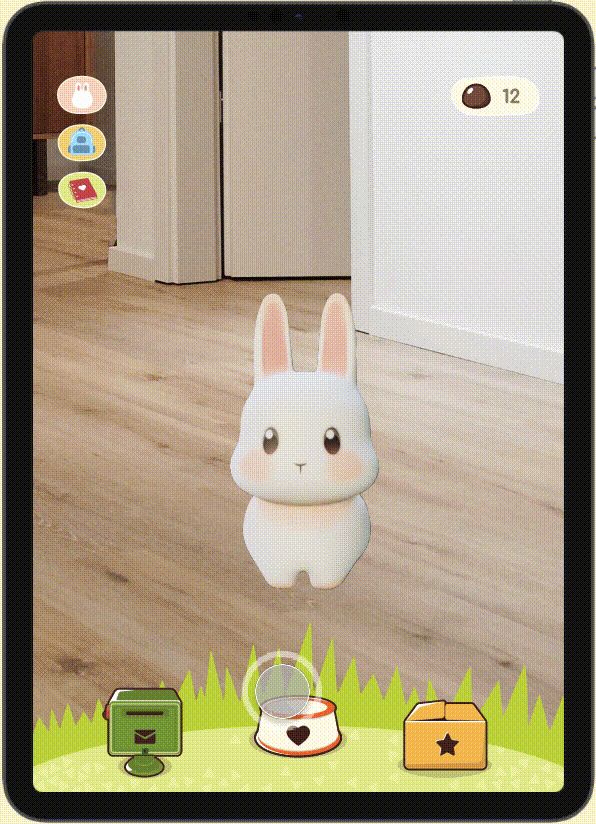
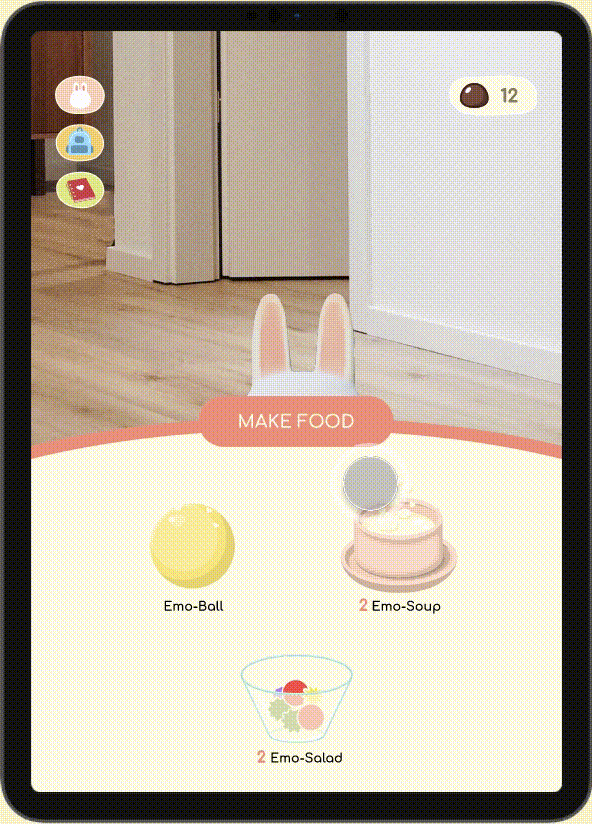
4 bunny foods
Four types of bunny food were introduced in the final design: emo-ball, emo-soup, emo-salad, and emo-burger. They cater to different logging habits, facilitating diverse perspectives in analyzing and understanding emotions.
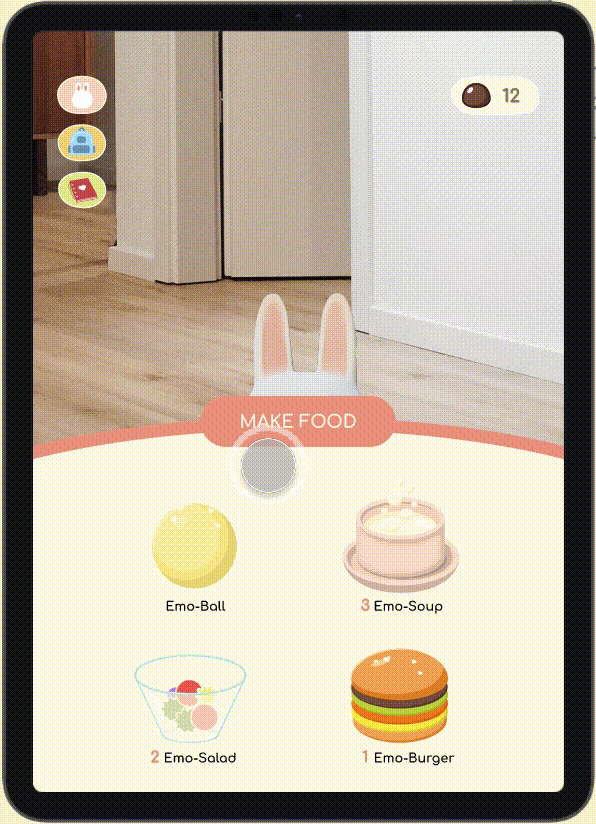
Emo-ball
The emo-ball is the most convenient option for creating food. You can record your emotions by drawing expressive visuals and providing accompanying text descriptions.
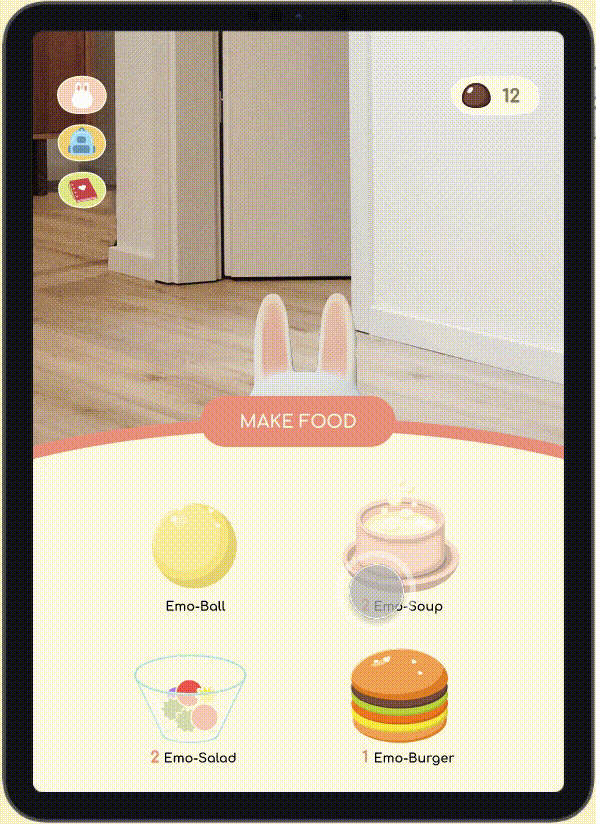
Emo-soup
Emo-soup enhances understanding of complex emotions. Assign a name and select fundamental emotions for a comprehensive experience.
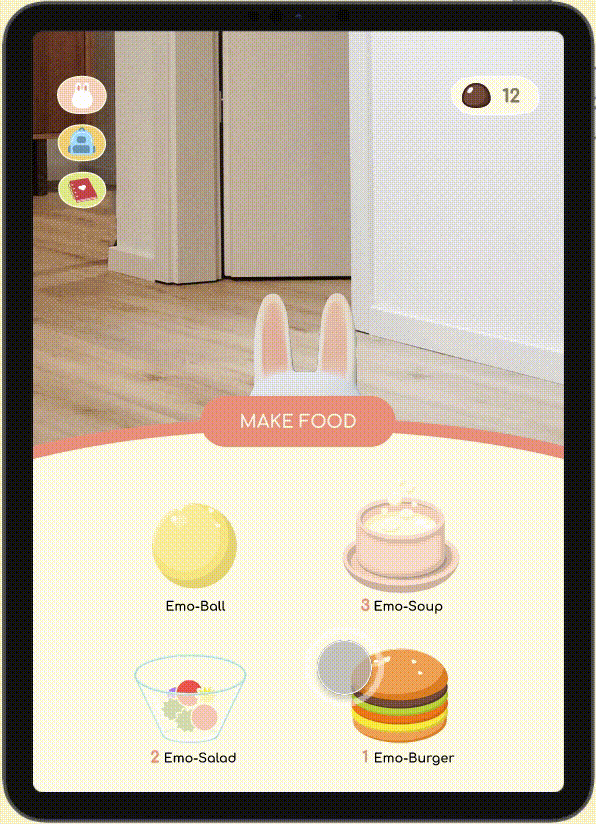
Emo-burger
In an emo-burger, you can upload media files to capture and preserve emotions vividly.
Emo-salad
Emo-salad promotes non-judgmental analysis of emotions. Name and tag your emotions to explore underlying causes and develop effective strategies. Aligned with therapist techniques and social emotional learning.

When you forget to feed
If you forget to feed your bunny for more than three days, it goes into a dormant state. Feeding it for three consecutive days will reactivate it, but don't worry, the bunny won't die. Ensuring a positive and uplifting experience is important in my game.
Raw food materials
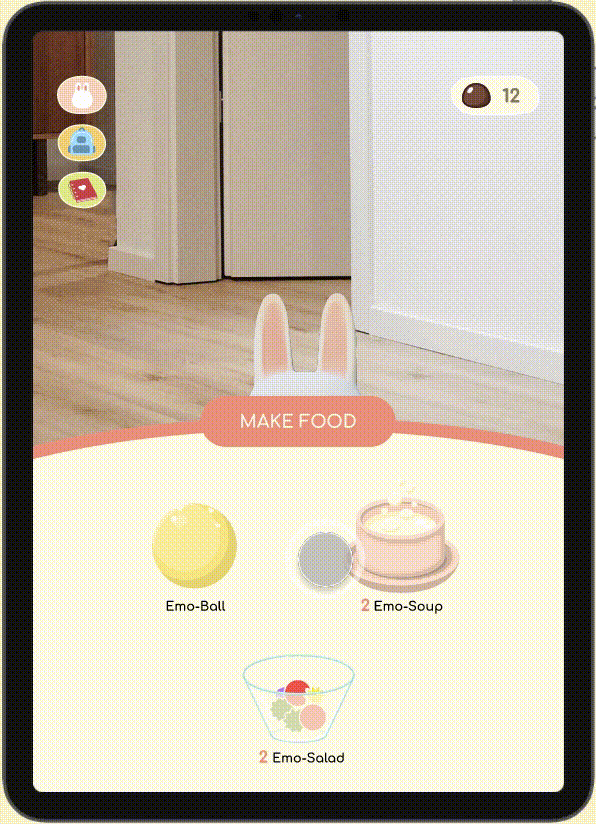
Raw food materials are required to make most food, except for the Emo-ball. They serve two main purposes:
1. Support different input preferences – Unlocking new feeding panels through raw materials lets players choose how they record emotions, based on their habits.
2. Maintain game balance – As consumable items, they keep the game loop active. Without them, collecting Emo-Chocolates would lose purpose once the shop is fully unlocked.
The current version includes 3 types of raw materials, with more planned in future updates.
Feed the Bunny, Log the Emotions
Feeding emotions to the Bunny—who then turns them into Emo-Chocolate—starts the game loop. This playful act helps players externalize their feelings, making it easier to acknowledge and express emotions in a light, judgment-free way.
GAMEPLAY

GAMEPLAY FLOW


Bunny’s Emotional Fragments
“Emotion Fragments” are short comics showing how the Bunny feels in different moments. The emotions are often subtle and easy to overlook, but relatable to everyday experiences.
This feature came from early ideation tests, where I noticed players really enjoyed reading the emotional descriptions. I then expanded them into comic-style illustrations to make them more engaging.
As the main rewards in Bunny Mood, these comics help players build emotional awareness in a light and playful way, while encouraging them to keep collecting and exploring.
MANGA CONTENT


To make the game feel friendly and intuitive, I designed light, in-character dialogues instead of using traditional tool-like tutorials. Through the Bunny’s voice, players gradually learn how to feed emotions, earn rewards, and unlock stories—without breaking the flow or mood. These conversations help explain the game while keeping it playful and emotionally safe.
