FLYE Branding
Rebuilt the brand identity of NYC’s largest e-bike retailer, Fly E-Bike, to align with its service-driven business model.

CONTEXT
Founded in 2018, Fly E-Bike became New York's leading electric bike retailer, primarily serving delivery riders. Following its 2024 NASDAQ listing, the company is expanding globally and diversifying its target customers. A rebrand was necessary to support the growth.
MY ROLE
-
Brand Positioning & Naming
-
Logo & Wordmark Redesign
-
Create Design Guidelines
-
End-to-End Rebranding Execution
-
Trademark Registration Legal Support
TIMELINE
Feb 2025 – Present (Ongoing Iterations)
PROBLEM
1. The Brand-Business Misalignment
Fly E-Bike was initially developed as a direct-to-consumer (DTC) brand. However, this positioning became misaligned with its actual business model, which provides retail, rental, and maintenance services for electric bikes. The current brand failed to reflect the brand's full service-driven DNA.
2. The Creative “Entropy”
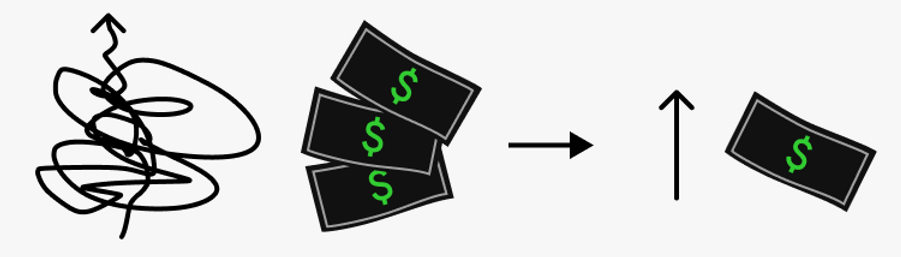
Rapid expansion without proper brand governence led to inconsistent visuals and fragmented logo usage across customer touchpoints.

3. The Trademark Registration Issue
The name “Fly E-Bike” could not be trademarked due to the generic term “E-Bike”, preventing brand protection as the company expands globally.
THE REBRANDING GOAL

Unify brand experience across all key touchpoints: website, mobile app, retail stores, rentals, repairs, and more.


Build brand recognition and customer trust to support the company’s entry and growth in new international markets.


Attract a new user base and transform from a delivery-focused brand to a brand for the mass public.


Ensure low-cost, high efficient implementation for a resource-limited internal team.
HIGHLIGHTS
Strategic Positioning:
Defined the brand voice and structure, positioning FLYE as ‘Your Local E-Bike Expert’.
System Consistency:
Developed a consistent brand book implemented across all physical, digital, and marketing touchpoints.
Business Impact:
Streamlined brand execution to effectively support the company’s rapid post-IPO expansion.
LOGO REDESIGN
A Visual Link Between Heritage and Growth
Since the brand’s inception, the “E-Rider” graphic logo had been in use and had built significant recognition as the most distinctive brand asset. We chose to retain and refine it rather than start from scratch. The goal was to preserve existing brand equity while improving clarity, scalability, and setting the foundation for the new identity system.


STRATEGY
Laying the Foundation: Naming, Structure, and Voice
I established a brand architecture and naming framework that could support the company’s transition from a product-focused retailer to a broader e-mobility service platform.
At the center of the system is FLYE, positioned as the parent brand representing the overall platform experience across digital and physical touchpoints. Around this foundation, a modular sub-brand structure was introduced to hightlight different business lines while maintaining a clear connection to the core brand.
Together, this structure establishes a clear and extensible foundation for future products, services, and global expansion, while preserving the existing brand equity and ensuring trademark registrability.

Establish a clearer position in the customer’s mind:
“Your Local E-Bike Expert”
Our previous slogan, “We Ride To Fly” was short and powerful, but it did not clearly express the brand’s core value. Using the Brand Pyramid framework, I distilled the brand from services and customer benefits to its core essence. The resulting slogan, “Your Local E-Bike Expert” positions the brand as both a trusted authority in e-mobility and a community-rooted service provider

Introduce a new visual element — the store signs
Because in our operations, store managers have the autonomy to adjust marketing strategies based on their local communities, some marketing materials are designed for individual stores rather than for the brand as a whole.
To support this, we needed a visual element that could distinguish each store while remaining connected to the core brand identity.
I introduced a store sign system, combining the slogan, the E-Rider logo, and the neighborhood name. This signage system not only addressed our operational needs but also helped position FLYE as a piece of local e-mobility infrastructure.

BRAND GUIDELINE
The Brand Book
As the new brand identity rolled out across different touchpoints, I created the FLYE Brand Book to document the system and guide consistent implementation.
The guidelines translate the brand identity into clear, practical rules—standardizing how the brand appears across digital products, retail environments, and marketing materials as the company continues to grow.
The Brand Book was not a one-time deliverable. As the business evolves, it requires continuous updates and iterations.


BRAND IN USE
One System, Many Touchpoints.


Led the 0→1 design of FLYE's rental product line, as the first step of the company's post-IPO digital transformation. Redesigned fragmented, offline operations into a unified cross-channel platform spanning the customer App, in-store experience, and internal SaaS, enabling recurring revenue growth and a new asset-light business model.
